A business owner or HR lead can run the project. A broker, third-party administrator (TPA), payroll specialist, and legal or tax professional may each own a piece.
Rushing causes real damage: late notices, vague eligibility rules, wrong reimbursements, and employees confused about premium tax credits. This guide walks through the full setup and the checks that follow.
Key Takeaways
- Work in sequence: timing, classes, budget, documents, notices, reimbursement process.
- Employees need qualifying individual coverage; employers must not steer them to one policy.
- Ordinary notice is due 90 days before the plan year.
- Brokers advise; the employer still approves the strategy and keeps its fiduciary duties.
How to Set Up an ICHRA for a Small Business
Setup runs through readiness review, plan design, documentation, employee communication, enrollment support, reimbursement processing, and post-launch monitoring. Your timeline depends on the start date, whether you're replacing a group plan, workforce complexity, and how much you outsource.
Prerequisites and Compliance Readiness
Before design begins, gather:
- Your benefits goals and budget
- An employee census
- Current group coverage details, if any
- A target start date
- Your payroll process
- Decision-makers and one owner for employee questions and records
Verify these items against current rules before launch: objective class definitions, required notices and plan documents, substantiation and privacy procedures, premium tax credit (PTC) coordination, and any ACA reporting duties.
Mistakes carry weight. Under IRC 4980D, certain group health plan failures can trigger a tax of $100 per day per affected individual, with reasonable-cause exceptions if corrected within 30 days of discovery, per the statutory text. That doesn't mean every paperwork slip triggers it, but it shows why precision matters.
Documents, Systems, and People Required
Essential items:
- A written plan document covering eligibility classes, allowances, covered expenses, opt-out, substantiation, and notice terms
- Summary materials and claims procedures (including denial reasons and appeal information)
- The employee notice
- A secure recordkeeping process
- Payroll and reimbursement workflows, plus a way to verify coverage
- A communication plan and named contacts for questions
Optional help, and who does what:
- Broker: Offers neutral help with individual-policy shopping. A broker doesn't necessarily administer the plan.
- TPA: Can administer reimbursements. Outsourcing doesn't remove the employer's retained fiduciary duties, according to DOL guidance.
- Benefits platform: Can display options and facilitate enrollment, but shouldn't select or endorse particular policies.
- Accountant or benefits attorney: Handles tax and legal questions.
Step-by-Step ICHRA Setup Sequence
Choose the start date. An ICHRA can begin mid-year; January 1 isn't required. If you're replacing a group plan, avoid a gap or impermissible overlap. The same participant can't choose between your group plan and an ICHRA, though different classes can use different arrangements.
Define eligible classes. Use objective criteria: full-time, part-time, salaried, hourly, seasonal, a collective bargaining agreement, a waiting period, a shared insurance rating area, or permitted combinations.
Set the budget and allowances. Federal rules set no ICHRA contribution cap or minimum, and QSEHRA caps don't apply. Terms must generally match within a class. Allowances can vary by family size and age, but the oldest participant's amount can't exceed three times the youngest's. Choose premiums-only reimbursement or premiums plus other medical expenses.
Prepare documents. Finalize the plan document, summary materials, claims and privacy procedures, and the employee notice before you announce anything.
Explain the offer. Cover the start date, allowance, coverage requirement, opt-out rights, PTC effects, and who to call.
Provide neutral shopping resources. Point employees to HealthCare.gov materials and licensed agents without choosing or endorsing a policy.
Launch reimbursements. Verify coverage, review documentation, approve claims, pay, and keep records securely.

Class Size Rules
A 10-employee minimum class size (for employers under 100) applies only when some classes get traditional group coverage and others get an ICHRA. It isn't a universal minimum. An ICHRA-only employer isn't subject to it. Counts include employees offered the ICHRA, not just those who enroll. A new-hire subclass can receive the ICHRA while existing employees in that class keep group coverage.
Notice Timing
The ordinary rule is written notice at least 90 calendar days before the plan year. Exceptions are narrow: newly eligible employees, and employers established less than 120 days before their first ICHRA plan year. An established business adopting an ICHRA doesn't get a blanket startup exception.

The DOL publishes an individual coverage HRA model notice. It should cover the allowance, effective dates, opt-out rights, coverage and substantiation requirements, PTC interaction, and the individual policy's non-ERISA status.
Post-Launch Checks and Validation
Confirm the plan runs as designed:
- Employee classes match the plan document
- Notices were delivered and tracked
- Participants have qualifying coverage
- Allowances and expenses apply consistently
- Reimbursements have required documentation
Then review on a recurring basis: new hires, terminations, qualifying events, coverage changes, payroll treatment, reporting, and upcoming deadlines. Skipping these checks lets small errors become delayed compliance problems.
Substantiation procedures must confirm coverage annually and for the month of each expense. Employee attestation can satisfy this, and a new insurer document every month isn't universally required. Reliance is allowed unless the plan has actual knowledge the information is wrong.
Employers under 50 full-time equivalents avoid the employer mandate, not all ACA reporting. Non-ALE ICHRA sponsors generally use Forms 1094-B and 1095-B, per the IRS instructions. Larger employers use 1094-C/1095-C, where codes 1T and 1U describe specific ICHRA offers.

Common ICHRA Setup Problems and Fixes
Missing or late employee notice
Problem: Employees get too little lead time.
Cause: Communication starts after design is final.
Fix: Build a compliance calendar, confirm the deadline, and deliver the notice through a trackable process. There is no universal retroactive cure for late notices, so prevention matters.
Unclear classes or inconsistent allowances
Problem: Eligibility language is vague, or similar employees are treated differently without a permitted basis.
Cause: Allowances designed informally.
Fix: Define each class and allowance in the plan document and have a qualified adviser review it.
Reimbursements without verification
Problem: An ineligible premium gets paid, or you can't explain why a claim was approved.
Cause: Manual records and unclear responsibility.
Fix: Use a documented substantiation workflow, secure records, and a designated reviewer.
Pro Tips for Implementing an ICHRA Effectively
- Build backward from the employee experience. Pick a realistic launch date and leave time for notices and enrollment help.
- Assign an owner to every recurring task: coverage verification, claims review, payroll, questions, new-hire enrollment, privacy, reporting, and annual review.
- Keep education neutral. An individual policy stays outside ERISA only if purchase is voluntary and the employer doesn't select or endorse an insurer or coverage.
- Separate the three tests. Class eligibility, employee PTC eligibility, and employer reporting are distinct. Passing one doesn't satisfy the others.
- Mind privacy. Plans and TPAs can be HIPAA-regulated, and the under-50-participant exception is narrow.
An independent brokerage such as Muneris Benefits can help employers compare coverage options, design benefit packages, and track changing federal and state requirements. Its account managers also help with benefits questions, claims, billing, and contracts. Employers should still consult legal or tax professionals for specialized advice.
Conclusion
A successful ICHRA depends on disciplined design, timely notice, sound documentation, accurate verification, and consistent administration. The contribution amount you choose matters, but these fundamentals determine whether the arrangement works in practice.
Start with a readiness review and get qualified guidance before launch. Virginia and West Virginia employers can contact Muneris Benefits at (888) 686-3741 for personalized support.
Frequently Asked Questions
How does an ICHRA work?
The employer sets an allowance and eligible expenses. Employees obtain qualifying individual coverage, then the employer reimburses approved expenses up to the allowance after receiving documentation or attestation.
What is the difference between an ICHRA and an HRA?
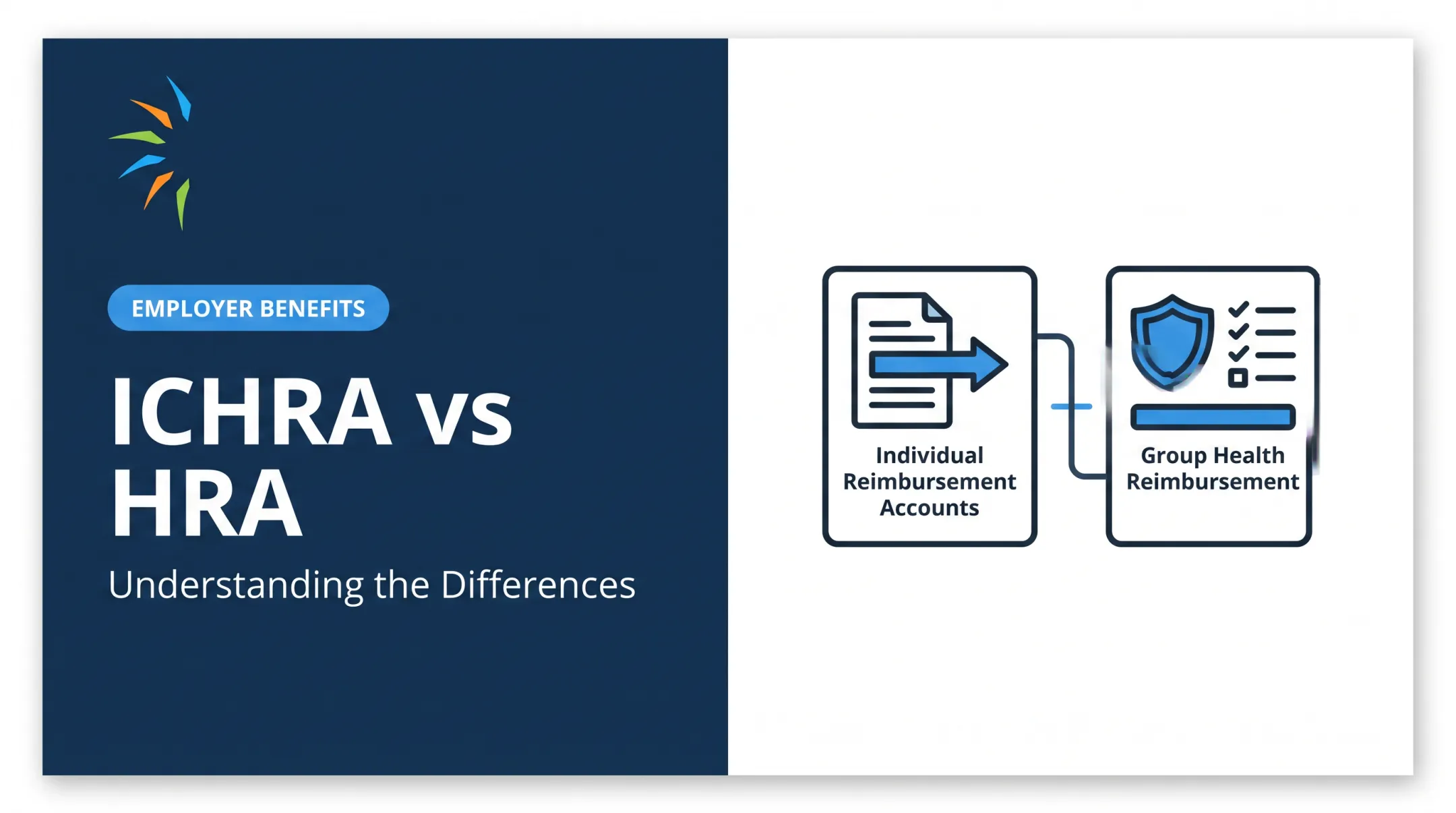
"HRA" is the broad category. An ICHRA is built around individual coverage with no contribution cap. Other types, such as excepted-benefit HRAs, pair with group plans and can't reimburse individual major-medical premiums.
What is the ACA affordability percentage for 2026?
It's 9.96% under Revenue Procedure 2025-25. It compares the employee's lowest-cost self-only silver premium minus the ICHRA amount to household income. It mainly matters to applicable large employers, and employer safe harbors differ.
Can a small business offer an ICHRA?
Yes. There's no minimum or maximum employer size. A QSEHRA is a separate, small-employer-specific option, with 2026 caps of $6,450 self-only and $13,100 family.
What notice must an employer give before starting an ICHRA?
Ordinarily, written notice at least 90 days before the plan year, covering the allowance, coverage requirements, reimbursement procedures, and PTC effects. Check the specific exceptions for newly eligible employees and new employers.
Do employees need individual health insurance to use an ICHRA?
Yes, they need qualifying individual coverage, and must provide proof or attestation. Short-term and stand-alone dental or vision plans don't qualify. Accepting an affordable offer generally ends PTC eligibility.