Introduction
Yes, an LLC can often pay for an owner's health insurance. Whether the payment is deductible, and where it gets reported, depends on the LLC's federal tax classification, the owner's role, and whether another employer plan is available.
Owners often mix up three separate steps:
- The business paying a premium
- The business deducting it as an ordinary expense
- The owner claiming a self-employed health insurance deduction on a personal return
Those steps are not the same, and confusing them is where owners get into trouble.
This guide covers tax classifications, coverage options, deduction limits, and reporting steps. Confirm anything specific to your situation with a CPA.
Key Takeaways
- Your IRS tax classification, not the LLC label, drives the treatment.
- Single-member owners and partners typically use the self-employed health insurance deduction.
- More-than-2% S-corporation shareholders need special payroll and W-2 reporting.
- Forming an LLC does not create a group plan, and employee premiums follow different rules.
How Your LLC's Tax Classification Affects Health Insurance
A single-member LLC is disregarded by default, and a multi-member LLC is taxed as a partnership. An LLC can elect corporate treatment with Form 8832, or S status with Form 2553. Start by confirming which classification you actually have.
Single-member LLC (sole proprietorship)
The owner usually holds individual coverage. The business may pay the premium or the owner may pay personally, but the deduction is generally taken on the owner's Form 1040 (Schedule 1, line 17), not as a standard expense on Schedule C.
To qualify:
- Net profit from the business is required
- No deduction applies for any month you or your spouse could have enrolled in a subsidized employer plan, even if you declined it
Multi-member LLC (partnership)
Partners are not W-2 employees. Premiums paid for a partner are usually treated as guaranteed payments:
- Deducted by the partnership
- Reported as income by the partner
- Claimed as a personal deduction on the partner's return
Reporting runs through Form 1065 and the partner's K-1. A reduction in distributions alone does not create a partnership deduction. Methods vary, so have your CPA confirm the approach.
LLC taxed as an S corporation
A more-than-2% shareholder gets special treatment. Per IRS guidance, the steps are:
- Pay or reimburse the premium through the corporation
- Include the amount in the shareholder's W-2 Box 1
- Exclude it conditionally from Boxes 3 and 5
- Claim the personal deduction on the shareholder's return

Payment alone is not enough. Wrong timing or W-2 treatment can jeopardize the deduction, so coordinate payroll with your CPA.
LLC taxed as a C corporation
An owner who is also an employee may receive employer-sponsored health benefits excluded from gross income under Section 106. That is a different mechanism from the self-employed deduction. Self-insured plans that discriminate in favor of highly compensated employees can trigger taxable inclusion.
Health Insurance Coverage Options for LLC Owners
Tax classification affects payment and reporting. It does not create a special "LLC owner health plan." An owner with no qualifying employees will often buy individual coverage.
Individual and Marketplace plans
Individual plans come from the Marketplace or directly from insurers. Marketplace plans offer guaranteed availability and income-based premium tax credits. Off-Marketplace plans vary by network, benefits, and underwriting rules.
Self-employed owners should estimate income for the coverage year, not last year, and update the Marketplace when projections change. Enhanced federal credits expired after 2025, so 2026 eligibility generally returns to 100%-400% of the federal poverty level.
Coverage through a spouse's employer
A spouse's plan can be practical, but eligibility matters. If you or your spouse could enroll in a subsidized employer plan in a given month, that month generally cannot count toward your deduction, even if you decline. Many employers also don't subsidize dependent coverage, so compare an individual policy against the group cost.
Group coverage for employees
A small-group plan makes sense once you have genuine non-owner W-2 employees. Federal small-group rules generally cover 1-50 employees, and states may expand that to 100. SHOP coverage requires at least one worker who is not an owner, spouse, or family member. An owner-only group fails.
Owner coverage and workforce benefits follow separate rules. Premiums for eligible employees follow ordinary business-expense and employee-tax treatment.
HRAs
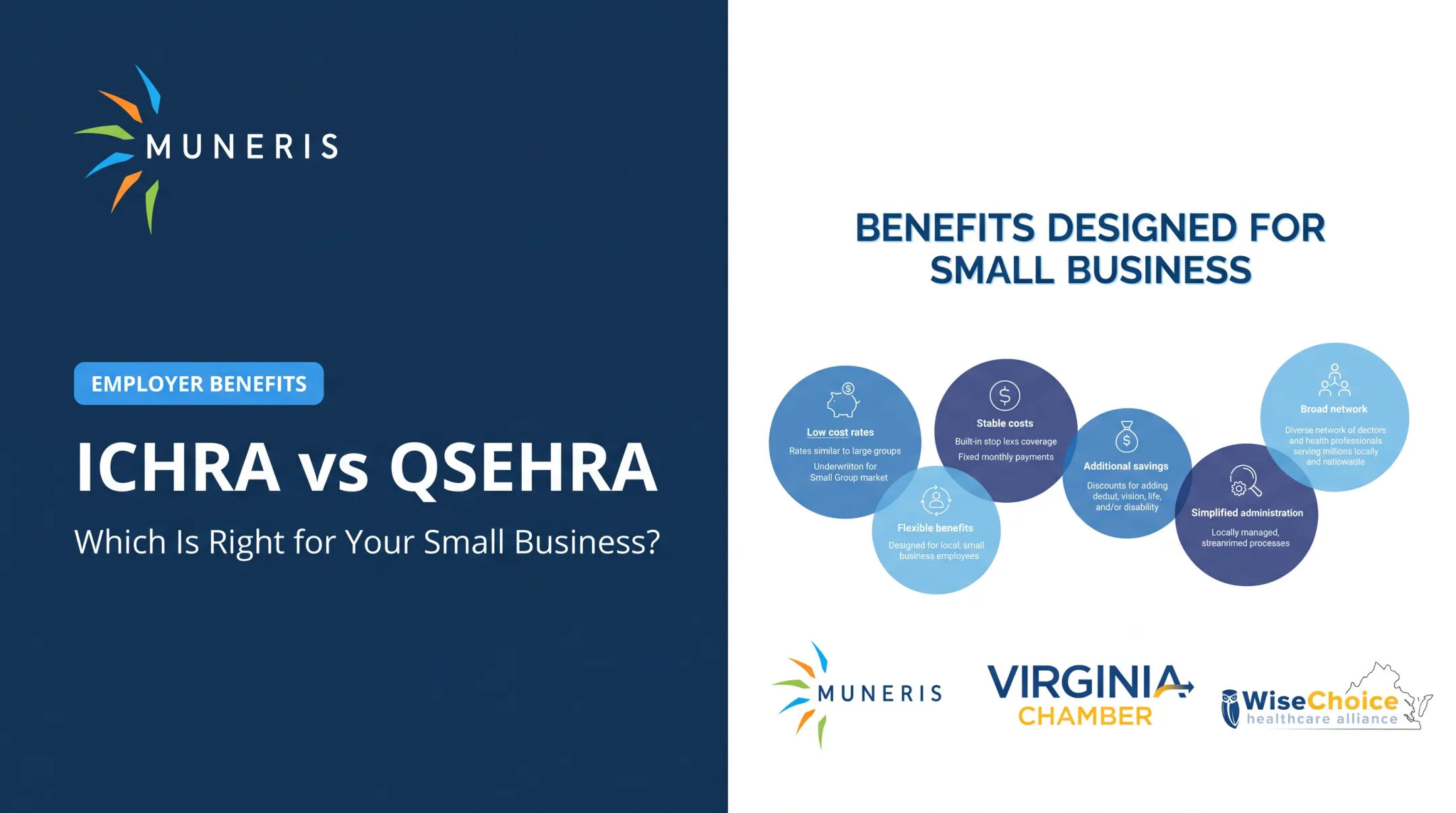
- QSEHRA: Employers under 50 FTEs with no group plan; 2026 ceiling $6,450 self-only / $13,100 family. Self-employed owners, partners, and more-than-2% S shareholders cannot participate.
- ICHRA: Any employer size, no federal contribution ceiling. Employees need qualifying individual coverage or Medicare.
HSA-eligible plans
A high-deductible plan can pair with a Health Savings Account. Contributions are deductible, growth is tax-free, and qualified medical withdrawals are tax-free. The 2026 limits:
| Measure | Self-only | Family |
|---|---|---|
| Contribution limit | $4,400 | $8,750 |
| Minimum HDHP deductible | $1,700 | $3,400 |
| Maximum out-of-pocket | $8,500 | $17,000 |

Ordinary premiums generally can't be paid from an HSA. More-than-2% S shareholders can't make pre-tax salary-reduction contributions, though they can deduct their own HSA contributions.
How to Claim the Deduction and Avoid Tax Mistakes
"Deductible" does not mean every owner premium goes on the LLC's profit-and-loss statement. The right treatment depends on entity type, income, eligibility, and reporting.
Determine whether the owner qualifies
Eligible premiums include:
- Medical, dental, vision, and qualified long-term-care insurance
- Voluntarily paid Medicare premiums
- Coverage for you, your spouse, dependents, and children under 27 at year-end
The monthly employer-plan restriction still applies, and eligibility counts even if you never enroll. Spouse coverage can qualify, but family attribution rules may treat an employed spouse as a more-than-2% shareholder.
Apply income limits
The deduction is limited to earned income from the business that established the coverage. For S shareholders, Form 7206 uses W-2 Box 5 Medicare wages.
If premiums exceed the business's net profit for the year, the deduction stops at that profit figure. Any excess is not deductible under this rule.
Marketplace credits add a wrinkle: the deduction changes the income used for the credit, and the credit changes the deductible premium. IRS Publication 974 provides iterative and simplified methods.
Use the correct forms
- Form 7206 is required for multiple income sources, Form 2555 filers, or qualified long-term-care premiums. Otherwise a worksheet in the Form 1040 instructions may work.
- The result flows to Schedule 1 (Form 1040), line 17.
- Partnerships report on Form 1065 and K-1.
- Reconcile advance credits on Form 8962. For tax years after 2025, excess advance credits have no repayment cap.

Never deduct the same premium twice, once as a business expense and again as the personal deduction. Do not claim it again on Schedule A either.
Keep records and coordinate
Retain documentation such as:
- Policy documents and invoices
- Proof of payment
- Reimbursement and payroll records
- Ownership details
- Evidence of employer-plan eligibility
The IRS generally advises keeping records for 3 years, and employment-tax records for at least 4 years.
Muneris Benefits can help compare coverage and explain insurance options. A CPA or tax advisor should approve the payment method, bookkeeping, payroll reporting, and filing position.
Practical Checklist: What to Do Before Your LLC Pays
- Gather the facts. Know your federal tax classification, ownership percentage, number of non-owner employees, payroll setup, and whether you or your spouse can access another employer plan.
- Compare coverage paths. Review individual, Marketplace, spouse-sponsored, small-group, HRA, and HSA options by premium, deductible, network, prescriptions, and expected household income. A subsidy calculator estimates assistance from income, age, and family size.
- Loop in your CPA first. Share policy and payment details, confirm the bookkeeping and payroll process, and schedule an annual review after any change in entity, ownership, staff, income, or coverage.
Conclusion
An LLC can often pay for health insurance, but the tax result depends on classification and compliance, not the LLC label.
Treat the insurance decision and the tax decision separately. Compare coverage with a qualified benefits professional, then confirm deductions, payroll treatment, and filing requirements with a CPA.
Frequently Asked Questions
Can I deduct health insurance premiums?
Eligible self-employed owners, partners, and qualifying S-corporation shareholders may be able to. It depends on IRS eligibility, income limits, employer-plan access, and reporting rules.
What is the best way to get health insurance when you are self-employed?
Options include Marketplace, off-Marketplace individual, spouse-sponsored, group, and HSA-compatible plans. The best fit depends on income, family needs, preferred providers, eligibility, and budget.
What are the health insurance options available for small business owners?
Options include Marketplace individual plans, spouse-sponsored coverage, small-group, HRAs, and HSA-compatible plans. Small employers typically have 1-50 employees, and SHOP enrollment goes through insurers or registered brokers. Verify carrier availability for your situation.
What is the average cost of private health insurance in the USA?
It varies by age, location, household size, plan, and subsidies. KFF's 2026 survey puts employer-sponsored family premiums at $28,303 a year in total, which is not an individual quote.
Can my LLC pay for my spouse's health insurance?
Possibly. Spouse coverage can qualify for the deduction, but treatment depends on your tax classification and your spouse's role. Have a CPA review it.
Does an LLC owner need a group health insurance plan?
No. An owner without qualifying employees can generally buy individual coverage. An LLC with eligible non-owner employees may evaluate small-group coverage under carrier and federal rules.